A City of Sadness 1989 is a film about the tragedy of war and its aftermath.
It is a powerful depiction of Taiwan’s struggle for independence and the devastating impact it had on individuals and families.
The film explores themes of loss, grief, and hopelessness as it follows the lives of four brothers and their struggles to cope with the chaos around them.
The cinematography is hauntingly beautiful, capturing both the destruction caused by war and the resilience of humanity in the face of adversity.
Overall, A City of Sadness 1989 is a poignant portrayal of a nation torn apart by conflict, showcasing both the darkness of humanity and its capacity for healing.

⇩⇩⇩
Review
A City of Sadness: A Masterpiece of Taiwanese Cinema
As a viewer, I have always been mesmerized by the skillful storytelling, exceptional cinematography, and powerful performances that have the ability to transport me to another world. This is exactly what I found in A City of Sadness, a film that tells a poignant story about the lives of four brothers living in Taiwan during an era of political turmoil.
The film, which was directed by Hou Hsiao-hsien and released in 1989, opens with a quote from the Book of Genesis: “In the beginning was the Word.” This sets the tone for what is to come, as the film explores themes such as language, identity, and memory.
The storyline begins in 1945 at the end of World War II when Taiwan is handed over to China. We follow a family of four brothers as they navigate through life during a period of political upheaval that includes the arrival of Nationalist troops and their subsequent takeover. Through their experiences, we witness how different members cope with loss and trauma while trying to maintain their sense of identity and connection to one another.
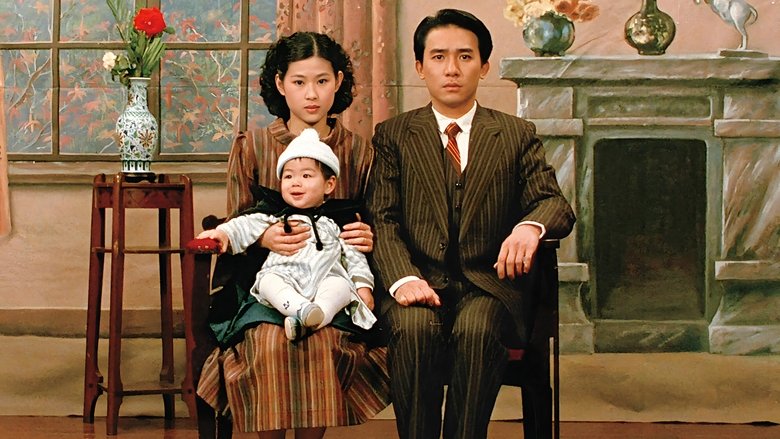
The cast is well-chosen and delivers impressive performances that make each character stand out. The main protagonist is played by Tony Leung Chiu-wai who portrays a deaf mute photographer struggling with his inability to verbally communicate but able to convey his emotions through pictures. Other noteworthy performances come from Jack Kao as an idealistic medical student turned soldier who falls into disillusionment with his country’s politics.
Another aspect worth celebrating in A City Of Sadness is its historical accuracy. It never feels like we’re watching something staged or fake; everything feels authentic because it is based on real events. The director clearly put in a lot of work to ensure that every detail was carefully crafted and accurate.
Furthermore, it features an impressive score composed by Giong Lim that perfectly captures both the sadness and hope of each scene. The score is a vital part of the movie as it elevates the emotions and deepens our connection to each character.
The cinematography in A City of Sadness is another standout feature, as it successfully captures the muted colors and moody atmosphere of the film. Every shot feels carefully chosen and perfectly composed, making it easy for us to get lost in this world and become emotionally invested in the story.
The film has been critically acclaimed, receiving numerous awards including Best Director at Cannes Film Festival. It is also considered a milestone in Taiwanese cinema history, paving the way for other directors to explore their own country’s past.
In conclusion, A City of Sadness is an essential piece of filmmaking that stands out as a powerful work of art. Its exceptional storytelling, impressive performances, meticulous attention to detail, and beautiful cinematography make it a classic that will continue to resonate with viewers for generations to come. If you haven’t had a chance to watch it yet, I highly recommend taking some time out to experience this masterpiece for yourself!
Technical Data
- Runtime : 159
- Release : 1989-10-21
- Genre : Drama, History
- Cast : Tony Leung Chiu-wai as Wen-Ching, Hsin Shu-Fen as Wu Kuan Mei / Hinome, Chan Chung-Yung as Wen-Heung, Jack Kao as Wen Leung, Tai Bo as Ah Jia
- Crew : Chiu Fu-Sheng as Producer, Hou Hsiao-hsien as Director, Chu Tien-wen as Writer, Wu Nien-Jen as Writer, Chang Tso-chi as Assistant Director
- Popularity 11.837
- Budget : 0
- Revenue : 0
- Company : ERA International, 3-H Films
- Summary : The story of a family embroiled in the “White Terror”, mainland China’s political repression that was wrought on the Taiwanese people by the Kuomintang government in the late 1940s.
- Tagline :
