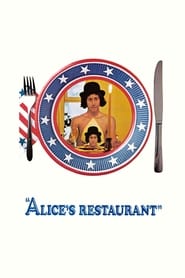
“Alice’s Restaurant 1969” is a film about a hippie named Arlo Guthrie who gets into trouble with the law and ends up on probation. He decides to help a friend clean out her restaurant, leading to an eventful Thanksgiving dinner that involves singing, drugs, and run-ins with authority figures. The movie is a snapshot of counterculture life in the late 60s, filled with colorful characters and poignant moments.
⇩⇩⇩
Review
Many of us have had our fair share of Thanksgiving dramas and disasters, but none can match the events that unfolded in “Alice’s Restaurant” in the year 1965. Based on the true story of singer-songwriter Arlo Guthrie, the movie tells a tale of friendship, music, and counterculture in a world that was rapidly changing.
The film follows Arlo Guthrie’s character as he visits his friend Alice in Stockbridge, Massachusetts for Thanksgiving. Together with Alice’s husband Ray, they take part in an event that will change their lives forever.
As they finish their holiday meal, Alice suggests that they clean out her restaurant’s garbage pile rather than leaving it for the landfill. They load up Ray’s pick-up truck with all sorts of rubbish and head off to dump it… but when they get there, they discover it’s closed for Thanksgiving. Not wanting to drive back with all of the garbage still in tow, Arlo and Ray decide to dump it all down a hillside ravine.
This decision has serious consequences as they later learn that littering is a federal offense punishable by time behind bars or military service. And so begins one of the most surreal and yet heartwarming tales ever told.
The film sets its sights on telling an offbeat adventure centered around a series of bizarre events brought about by youthful carelessness and innocence. Beneath this zany surface lies a poignant commentary on social mores that is both timeless and universal.
The cast involved is impressive; Patricia Quinn plays Alice, who runs her own restaurant and provides shelter for those who need it most. James Broderick (West Wing), best known for his role as Doug Lawrence in “Family,” portrays Officer William Obanhein – an upstanding citizen who represents the values of law and order.
But what makes this movie stand out among others is its portrayal of folk culture during the 1960s – an era of cultural upheaval and social activism. The film’s score and popular soundtrack capture the essence of the times with a mix of folk, country, and rock.
The film’s title track, “Alice’s Restaurant Massacree” by Arlo Guthrie himself, is a classic piece that has become synonymous with peace, love, and the counterculture scene. Its mesmerizing beat and catchy lyrics have stood the test of time and remain some of the most iconic songs ever.
“Alice’s Restaurant” also offers insight into hippie culture, which was characterized by its emphasis on peace, love, and social justice. In many ways, Alice’s restaurant was a hub for these ideals – offering an open door to anyone who was in need.
The movie also highlights how these ideals clashed with mainstream American values at the time – particularly when it comes to authority figures. Obanhein represents this worldview in the film as he tries to enforce laws that seem trivial compared to what’s happening in Vietnam.
Despite this tension between cultures portrayed in “Alice’s Restaurant,” ultimately the movie champions acceptance and understanding – holding fast to its belief that kindness can prevail over even the toughest circumstances.
Looking back on this movie now almost sixty years later we can see just how much it has impacted popular culture. With countless TV shows referencing it through the decades as an ode to counter-culture values it’s clear that its influence has been felt for generations.
Additionally, no matter how far we get from those turbulent times, themes such as inclusivity are still just as relevant today; reminding us all that compassion knows no bounds.
In terms production quality and cinematography nothing is lacking here either; director Arthur Penn captures every nuanced exchange perfectly making sure that each moment stands out on its own merit never getting lost in an over-convoluted narrative or trying too hard for melodrama.
Whereas some films may rely on flashy special effects or convoluted plots to keep their audiences invested, “Alice’s Restaurant” holds our attention with authentic dialogue and well-drawn characters. As the audience, we are drawn into the story and are made to feel as though we are right there beside these loveable cast members.
Overall, “Alice’s Restaurant” is a movie that embodies all that we cherish about counterculture during the 1960s. Its themes of acceptance, kindness, and inclusivity are still just as relevant today as they were 60 years ago. If you’re in need of a feel-good dose of nostalgia mixed with iconic folk-rock tunes then look no further than this classic film – it’s sure to bring a smile to even the most jaded viewer.
Technical Data

- Runtime : 111
- Release : 1969-08-20
- Genre : Drama, Comedy, Music
- Cast : Arlo Guthrie as Arlo Guthrie, Pat Quinn as Alice Brock, James Broderick as Ray Brock, Tina Chen as Mari-chan, Geoff Outlaw as Roger Crowther
- Crew : Gerald B. Greenberg as Editorial Manager, Richard Marks as Editor, John Mortensen as Set Decoration, Arthur Penn as Screenplay, Arthur Penn as Director
- Popularity 7.868
- Budget : 0
- Revenue : 0
- Company : Elkins Entertainment
- Summary : After getting kicked out of college, Arlo decides to visit his friend Alice for Thanksgiving dinner. After dinner is over, Arlo volunteers to take the trash to the dump, but finds it closed for the holiday, so he just dumps the trash in the bottom of a ravine. This act of littering gets him arrested, and sends him on a bizarre journey that ends with him in front of the draft board.
- Tagline : Every Generation Has A Story To Tell.
