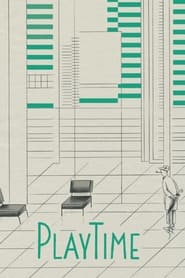
“PlayTime 1967” is a surreal and inventive film by Jacques Tati. The movie follows Monsieur Hulot as he navigates through a modern Parisian city, filled with confusing architecture and humorously choreographed chaos. The film’s unique visual style, sparse dialogue, and clever use of sound design create a world that is both bizarre and fascinating. Overall, “PlayTime 1967″ is a masterclass in avant-garde filmmaking that leaves you pondering the absurdity of modern life.”
↓↓↓
Review
It was the year 1967 when French filmmaker Jacques Tati released his ambitious comedy, “PlayTime”. Set in a dazzling modern Paris, the film’s storyline follows Mr. Hulot as he gets lost in a labyrinth of office buildings, apartments, and nightclubs while trying to meet a friend. The film’s plot is centered around the rapid urbanization of France at that time and its impact on social interactions among people.
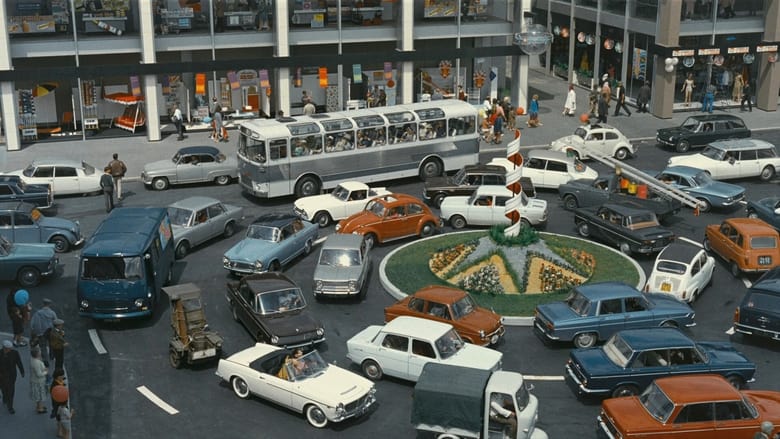
Tati’s vision for “PlayTime” was nothing less than a monumental undertaking. He built an entire city set solely for this movie, consisting of dozens of building facades that could be lit up from the inside to create stunning neon scenery.
The film was a critical success but did not do well at the box office which led to Tati’s financial distress. Despite that though, it has remained an important cultural touchstone since its release.
One of the things that makes “PlayTime” so unique is its use of sound. While most films rely heavily on dialogue to convey meaning, Tati almost exclusively uses ambient noise and music to set the tone for each scene.
The movie cleverly juxtaposes old Paris with modern Paris with their urban planners assuming fervent ideas about how people would interact with each other in this new setting only to have them backfire comically when people end up behaving differently than expected.
The film features an ensemble cast led by Tati himself as Mr. Hulot. The characters are all archetypes or caricatures rather than fleshed-out individuals which helps shift focus from individual stories to broader societal changes occurring during urbanization.
Despite its commercial failure upon release, “PlayTime” has earned massive critical acclaim over time. It was even included on Sight & Sound’s list of greatest films ever made in 2012 ranking at number 27 out of 358 films.
Part of what makes it so well-regarded is the way Tati uses filming techniques to create a sense of scale. He uses long shots that encompass entire environments, deftly moving between them while the camera remains fixed which gives the viewer a sense of being lost in the maze like Mr. Hulot.
The movie’s production design is also noteworthy, particularly Tati’s use of color. Everything from the walls to the clothing worn by characters seems to be bathed in bright hues that give the film a heightened sense of reality.
“PlayTime” is not without its flaws though. The movie’s pacing can make it feel overly long at times and some gags fall flat on their face but it’s hard to deny its status as a landmark achievement in cinema.
Despite not winning any major awards during its time, “PlayTime” has been celebrated by critics worldwide. It’s been analyzed for its sound design and cinematography, studied for its impact on cinema technique and culture, and even parodied for its iconic moments such as the chaotic restaurant scene.
One thing is certain: “PlayTime” is not just a film — it’s an immersive experience where viewers are transported to another world entirely. It’s a testament to Tati’s ambition and creativity that he was able to bring such an unconventional story to life with such flair and imagination almost 60 years ago.
It remains one of those rare films that can be enjoyed on multiple levels – as comedy, satire, or even visual art – making it a true masterpiece in every sense of the word.
In conclusion, whether you’re an avid cinephile or simply someone who wants to explore new cinematic horizons, “PlayTime” is definitely worth watching. It showcases filmmaking at its finest while delivering a message that resonates even today – human interactions may change with time but remain important nevertheless!
Technical Data
- Runtime : 115
- Release : 1967-12-16
- Genre : Comedy
- Cast : Jacques Tati as Monsieur Hulot, Barbara Dennek as Young Tourist, Rita Maiden as Mr. Schultz’s Companion, France Rumilly as Woman Selling Eyeglasses, France Delahalle as Shopper in Department Store
- Crew : Jacques Tati as Screenplay, Jacques Tati as Director, Jacques Lagrange as Screenplay, Jean Badal as Director of Photography, Jacques Cottin as Costume Design
- Popularity 9.026
- Budget : 0
- Revenue : 0
- Company : Jolly Film, Specta Films
- Summary : Clumsy Monsieur Hulot finds himself perplexed by the intimidating complexity of a gadget-filled Paris. He attempts to meet with a business contact but soon becomes lost. His roundabout journey parallels that of an American tourist, and as they weave through the inventive urban environment, they intermittently meet, developing an interest in one another. They eventually get together at a chaotic restaurant, along with several other quirky characters.
- Tagline :
