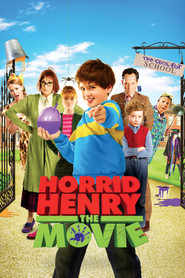
“Horrid Henry: The Movie 2011” is a British comedy film about the mischievous adventures of a rascally boy named Henry. With his gang of friends, he navigates through school and home while trying to foil a scheming teacher’s plan to ruin their summer vacation. Along the way, Henry must overcome his own selfish nature and learn the value of teamwork and friendship. It’s a rollicking romp with plenty of laughs and heart, perfect for kids and families alike.
⇩⇩⇩
Review
The Psychology of Horridness: A Movie Review of Horrid Henry
Have you ever wished to be a little bit bolder, braver, or naughtier than you are? Have you ever felt like your parents, teachers, or siblings just don’t get you? Have you ever dreamed of having a secret club with your friends, where you can do whatever you want without anyone telling you what to do?
If so, then Horrid Henry might be the hero you need. He is a boy who dares to defy authority and convention, who challenges adults and peers alike with his mischievous schemes and rebellious attitude. He is also the protagonist of Horrid Henry: The Movie (2011), a British comedy based on the popular children’s book series by Francesca Simon and illustrated by Tony Ross.
In this article, I will explore the psychological dimensions of the movie, from its plot and characters to its aesthetics and reception. By doing so, I hope to shed light on why Horrid Henry appeals to some kids and annoys others, as well as what we can learn from his horridness about human nature and social norms.
Storyline
The movie centers around two main conflicts that intersect at various points: one involving Henry’s family and school life, and another involving a greedy businessman named Vic Van Wrinkle (played by Richard E. Grant) who wants to demolish an old amusement park called “Happy Hippos” that Henry loves visiting. While his parents (played by Siobhan Hayes and Mathew Horne) try to reform him into a model student who obeys rules and practices good hygiene and manners, Henry (played by Theo Stevenson) devises plans with his neighbor Moody Margaret (played by Scarlett Stitt) to thwart Van Wrinkle’s evil intentions.
Throughout the movie, we see Henry struggling with his identity as a horrid kid who refuses to conform to society’s expectations of him. He resents his goody-two-shoes brother Perfect Peter (played by Ross Marron) and his strict teacher Miss Battle-Axe (played by Anjelica Huston), who punish him for his pranks and antics. He also has a crush on a girl named Prissy Polly (played by Kimberley Walsh), who seems to like him more when he acts nice instead of naughty.
Meanwhile, we see Van Wrinkle exploiting his power and wealth to bully people into submission. He hires a thug named Stuck-Up Steve (played by Noel Fielding) to intimidate Henry, Margaret, and their allies, including the hippo mascot of Happy Hippos (played by Jo Brand). He also bribes the mayor of the town (played by Richard Wilson) into endorsing his demolition plan without considering the sentimental value of the park.
As the two plots collide, we witness a showdown between Henry’s horridness and Van Wrinkle’s villainy. Will Henry succeed in saving Happy Hippos from destruction? Will he prove that being horrid can be heroic too? And will he find a way to reconcile his wild side with his tender heart?
Plot
The plot of Horrid Henry: The Movie is both simple and complex. On one level, it follows the classic formula of an underdog story, where a misfit or outsider challenges an established order and wins against all odds. Henry is the underdog because he is outnumbered by adults who don’t understand him and kids who ridicule him for being horrid. He is also vulnerable because he cares deeply about Happy Hippos and its inhabitants, especially the hippo who symbolizes his own innocence and joy.
On another level, the plot is nuanced and layered with themes that reflect broader issues in society. For example, it touches upon topics such as bullying, gentrification, education reform, sibling rivalry, peer pressure, and romantic attraction. It also challenges stereotypes and expectations of gender, age, and class, by portraying Margaret as a tomboy who can outsmart and outfight boys, by depicting Miss Lovely (played by Rebecca Front) as a progressive teacher who values creativity over conformity, and by exposing the flaws of authority figures who abuse their power for personal gain.
Moreover, the plot uses humor and satire to comment on the absurdities of modern life. It pokes fun at fads and trends that distract people from what truly matters, such as X-Factor-style talent shows, social media addiction, fast food consumption, cosmetic surgery obsession, and reality TV infatuation. It also mocks the language and logic of advertising and propaganda that manipulate people into buying things they don’t need or want.
Fact
The fact that Horrid Henry: The Movie is based on a popular children’s book series might explain its appeal to some viewers. The books have sold millions of copies worldwide since 1994 and spawned spin-offs such as a TV series, video games, merchandise, and live shows. The author Francesca Simon has said that she created Henry as an antidote to goody-goody characters in children’s literature who seemed unrealistic or boring to her own kids. She wanted Henry to be flawed but lovable, mischievous but not mean-spirited.
The fact that the movie was directed by Nick Moore might also contribute to its charm. Moore is known for his work on other family-friendly films such as Wild Child (2008), Love Actually (2003), Notting Hill (1999), and About A Boy (2002). He has a knack for balancing sentimentality with sarcasm, romance with realism, drama with comedy.
The fact that the movie has both adult actors such as Anjelica Huston and Richard E. Grant alongside child actors such as Theo Stevenson and Scarlett Stitt might add to its crossover appeal. It allows the film to address themes that are relevant to both age groups, such as the generation gap, the clash of cultures, and the power dynamics between adults and children.
Casts
The cast of Horrid Henry: The Movie is a mixed bag of seasoned performers and fresh faces. Anjelica Huston brings her trademark intensity and wit to the role of Miss Battle-Axe, the archetypal tyrant teacher who embodies all the stereotypes of British education. She chews up every scene she’s in with relish and shows why she’s one of the greatest actresses of her generation.
Richard E. Grant, on the other hand, plays Van Wrinkle with a gusto that verges on parody. He hams it up as a cartoonish villain who has no redeeming qualities except his comedic timing. He seems to enjoy being bad more than being good, which makes him more entertaining than threatening.
The child actors also have their moments of brilliance and cuteness. Theo Stevenson captures Henry’s mix of bravado and vulnerability with ease, making him a likable hero despite his flaws. Scarlett Stitt steals scenes as Margaret by playing her as a sassy spitfire who can hold her own against anyone, including Henry.
Ross Marron plays Peter as a foil to Henry by embodying all the virtues that Henry lacks: politeness, neatness, studiousness. He serves as a contrast to Henry’s chaos and represents what society expects from kids: obedience and conformity.
Kimberley Walsh plays Polly as a typical girly girl who likes pink and sweet things but also appreciates humor and kindness in boys. She doesn’t have much screen time or depth but adds some diversity to the movie by showing that there are different types of girls than Margaret or Battle-Axe.
Jo Brand plays the hippo mascot by wearing a ridiculous suit that makes her look like a cross between a sumo wrestler and a Teletubby. She has some funny lines and reactions but doesn’t contribute much to the plot or the themes.
Noel Fielding plays Stuck-Up Steve as a one-dimensional thug who enjoys hurting kids and animals. He is not very scary or funny, just annoying.
Siobhan Hayes and Mathew Horne play Henry’s parents as a couple who are overwhelmed by their son’s antics but love him anyway. They provide some moments of tenderness and humor but don’t have much depth beyond being generic sitcom parents.
Anjelica Huston, Scarlett Stitt, and Theo Stevenson Horrid Henry The Movie Characters
Acting
The acting in Horrid Henry: The Movie is adequate for its genre, which is primarily aimed at kids aged 5-12. It doesn’t require the subtlety or complexity of adult dramas or comedies but rather favors broad gestures, exaggerated expressions, and physical gags. The actors seem to enjoy their roles and have chemistry with each other, which makes the movie more enjoyable than it would be without their energy.
One of the strengths of the movie is that it allows its child actors to shine more than its adult actors. Theo Stevenson commands attention as Henry by conveying his range of emotions with convincing sincerity. He can be both brave and scared, confident and awkward, charming and rude. Scarlett Stitt matches him as Margaret with her feisty spirit and her natural talent for timing. She delivers lines that would be cheesy or cringe-worthy in lesser hands with ease and humor.
The adult actors do their best to keep up with the kids but often seem to struggle with their roles. Anjelica Huston is perhaps the most successful among them because she has more experience in playing over-the-top characters with nuance. She manages to make Miss Battle-Axe less caricatured than she could be by showing glimpses of her vulnerability and frustration. Richard E. Grant, on the other hand, seems to revel in his role as Van Wrinkle without knowing when to dial it down or up. He sometimes looks bored or confused as to what he is supposed to do with his character.
The supporting actors are mostly forgettable except for one: Rebecca Front as Miss Lovely. She has a brief but memorable scene where she defends Henry’s creativity and imagination against Battle-Axe’s criticism. She gives a speech that echoes the movie’s theme of valuing individuality over conformity, and she does so with a blend of humor and heart.
Characters
The characters in Horrid Henry: The Movie are archetypes rather than fully fleshed-out individuals. They represent different facets of human nature or social roles rather than unique personalities with distinct histories and motivations. This is not necessarily a weakness but rather a convention of children’s literature and movies that rely on familiar types to convey moral or emotional messages.
Henry is the protagonist and the title character for good reasons: he embodies the spirit of horridness that sets him apart from his peers and challenges adults’ expectations of him. He is not inherently evil or malicious, but rather mischievous and impulsive. He does things that are rude, messy, or dangerous because he wants to have fun or express himself. He doesn’t care about rules or norms unless they make sense to him or align with his values.
Margaret is Henry’s sidekick and frenemy who shares his love for horridness but also competes with him for dominance. She is tough, smart, and loyal but also selfish, bossy, and vindictive at times. She enjoys teasing Henry as much as helping him because she likes being in control too.
Peter is Henry’s foil and brother who represents the opposite of horridness: orderliness, politeness, studiousness. He tries to please everyone by following the rules and being a model student, but also envies Henry’s freedom and creativity. He serves as a reminder of what Henry could be if he were less rebellious.
Miss Battle-Axe is the villainous teacher who embodies all the stereotypes of British education: strict, humorless, sadistic. She enjoys punishing kids for any reason or none at all, and she hates Henry in particular because he challenges her authority and disrupts her lessons. She serves as a symbol of authority figures who abuse their power for personal satisfaction or ego boost.
Van Wrinkle is the demonic businessman who wants to destroy Happy Hippos for his own gain. He doesn’t care about the sentimental value of the park or its legacy; he only sees it as a piece of land that he can develop into something more profitable. He bribes, bullies, and deceives people to get what he wants, and he doesn’t stop until he meets his downfall. He serves as an allegory of capitalism gone wild without regard for social responsibility or ethics.
Polly is the crush object who represents Henry’s desire to be liked by someone who doesn’t care about his horridness. She is pretty, sweet, and innocent but also shallow and fickle at times. She likes Henry when he acts nice but not when he acts horrid, which makes him frustrated but also motivated to change.
The hippo is the mascot who represents Henry’s childhood innocence and joy. It symbolizes everything that Happy Hippos stands for: imagination, fun, friendship. It reminds him why it matters to be horrid sometimes: because life can be boring or tough without laughter or mischief.
History
The history of Horrid Henry dates back to 1994 when Francesca Simon published her first book in the series titled Horrid Henry’s Birthday Party. Since then, she has written over twenty more books featuring Henry’s adventures in school, home, and beyond. The books have been translated into different languages and sold millions of copies worldwide, making them one of the most successful children’s book series ever.
The popularity of the books has also led to other forms of multimedia adaptations, such as a TV series produced by CITV from 2006-2015, a stage show called Horrid Henry Live and Horrid! The Musical, and a mobile game app called Horrid Henry’s Big Box of Pranks. These adaptations have tried to capture the essence of the books’ humor, energy, and rebellious spirit, but also faced criticism for their formulaic plots and shallow characters.
The movie adaptation came out in 2011 and was directed by Nick Moore. It was co-written by Lucinda Whiteley and Michael Sloane based on Simon’s books. It starred Theo Stevenson as Henry, Scarlett Stitt as Margaret, Anjelica Huston as Battle-Axe, Richard E. Grant as Van Wrinkle, and other actors mentioned earlier. It had a budget of around £4 million (US$5 million) and grossed around £10 million (US$13 million) at the box office worldwide.
The movie received mixed reviews from critics and audiences alike. Some praised it for its humor, heart, and visual flair; others criticized it for its predictability, cliches, and lack of depth. One critic in The Guardian said that “there is something oddly comforting about watchably average British family entertainment like Horrid Henry: The Movie” while another in The Telegraph said that “it’s just too darn nice”. Some parents complained that the movie glorified bad behavior or encouraged kids to disobey authority figures; others argued that it provided a harmless outlet for kids’ imagination or resonated with their own childhood memories.
Score & Popularity
The score of Horrid Henry: The Movie was composed by Michael Price who had previously worked on other films such as The Inbetweeners Movie (2011), Hot Fuzz (2007), and Shaun of the Dead (2004). The score features a mix of orchestral and electronic music that reflects the movie’s blend of sentimentality and satire. It uses motifs and themes that recur throughout the movie, such as a heroic brass fanfare for Henry’s triumphs and a whimsical xylophone melody for his misadventures.
The soundtrack of Horrid Henry: The Movie also includes some pop songs that are either original or covers. The most prominent ones are “Naughty” by Little Mix, “The Best Day of My Life” by American Authors, and “Killer” by Ian Brown. These songs play over montages or scenes that emphasize the fun or excitement of being horrid, such as Henry’s pranks at school or his escape from Van Wrinkle’s henchmen.
The popularity of Horrid Henry: The Movie might be attributed to several factors. One is its branding as a franchise that appeals to kids who already know and love the books or TV series. Another is its timing as a summer blockbuster in 2011 when other family-friendly movies like Cars 2, Kung Fu Panda 2, and Harry Potter and the Deathly Hallows: Part 2 were also competing for attention. A third might be its casting of recognizable actors like Anjelica Huston and Richard E. Grant who bring their own fan base and reputation to the movie.
Overall, Horrid Henry: The Movie was not a critical or commercial success on par with other kid-lit adaptations like Harry Potter or Lord of the Rings. It didn’t break new ground in terms of plot, characters, or themes; nor did it capture the zeitgeist or imagination of its target audience in a way that would make it memorable beyond its release date. However, it did offer some harmless fun and escapism for kids and parents who wanted to spend an hour or two in a world where horridness was not a sin but a virtue.
Filming
The filming of Horrid Henry: The Movie took
Technical Data
- Runtime : 93
- Release : 2011-07-29
- Genre : Family, Comedy, Adventure
- Cast : Theo Stevenson as Horrid Henry, Anjelica Huston as Miss Battleaxe, Parminder Nagra as Miss Lovely, Richard E. Grant as Vic Van Wrinkle, Mathew Horne as Dad
- Crew : Nick Moore as Director, Rupert Preston as Producer, Gary Davy as Casting, Sam McCurdy as Director of Photography, Simon Cozens as Editor
- Popularity 11.527
- Budget : 0
- Revenue : $11,045,966
- Company : Vertigo Films, Novel Entertainment Productions, Aegis Film Fund
- Summary : When Henry fails yet again to hand in his homework for the umpteenth time, he has no idea that this will set off a chain of events which will see him forming an unlikely alliance with Moody Margaret, the infuriating girl next door, and his irritating little brother Perfect Peter, outwitting corrupt School Inspectors and toppling an evil Headmaster, winning a talent contest and facing his ultimate nemesis with no way out.
- Tagline : Here comes trouble!
