“Kandahar 2001” is a story of survival and redemption. A desperate woman risks everything to reach her sister in war-torn Afghanistan. The journey is a treacherous one, filled with danger and obstacles at every turn. In the end, she finds hope in the unlikeliest of places, discovering the strength to endure even the toughest battles.
↓↓↓
Review
In 2001, an Iranian filmmaker named Mohsen Makhmalbaf brought a film to the Cannes Film Festival that would shock and captivate audiences around the world. The movie was called “Kandahar,” and it told the story of a woman’s journey to find her sister in war-torn Afghanistan.
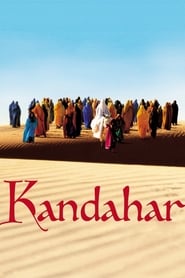
The film opens with a shot of a group of women walking in the desert, their faces covered by black veils. The camera then cuts to Nafas (played by Niloufar Pazira), an Afghan-born Canadian journalist who receives a letter from her sister, who is living in Kandahar. In the letter, her sister informs her that she intends to commit suicide during the next solar eclipse.
Nafas sets off on a dangerous journey to reach Kandahar before the eclipse reaches its peak. Along the way, she encounters various obstacles: landmines, bandits, oppressive Taliban rule, and more.
Makhmalbaf filmed “Kandahar” on location in Afghanistan just months after the fall of the Taliban regime. He took advantage of the country’s stunning landscapes and cast non-professional actors to lend authenticity to his tale. The result is a film that feels less like fiction and more like documentary.
One of the most memorable scenes in “Kandahar” comes when Nafas is stopped at a checkpoint by Taliban soldiers who are searching for an escaped prisoner. The prisoner is hiding nearby with explosives strapped to his body–he intends to blow himself up in order to earn his place in paradise.
The tension in this scene is palpable as viewers watch Nafas try to convince one of the soldiers to take her along so she can find her sister. When he finally relents, she climbs into the back of their truck and we see her face for the first time without her veil. It’s an incredibly powerful moment that symbolizes the struggle of Afghan women to find their voice and identity in a male-dominated society.
“Kandahar” isn’t just a film about the horrors of war; it’s also a commentary on cultural clashes and the complexities of identity. At one point, Nafas meets an American doctor who is trying to educate Afghan children about hygiene. He tells her, “They don’t even know how to blow their nose. How can you expect them to understand democracy?”
This scene is a clear indictment of America’s intervention in Afghanistan and its attempts to impose Western ideals on a country with vastly different cultural values. It’s a reminder that, as Simon Sinek has often said, “Trust and cooperation are not standard in our organizations and yet these are essential for our success.”
The cast of “Kandahar” is exceptional, particularly Niloufar Pazira, who was herself an Afghan refugee before she became an actress. She imbues Nafas with a quiet intensity that makes her journey all the more compelling.
The film’s score is hauntingly beautiful, blending traditional Afghan music with modern Western sounds. This fusion perfectly captures the conflicted nature of Afghanistan’s identity.
Despite its critical acclaim, “Kandahar” was not without controversy. Some Western audiences criticized Makhmalbaf for portraying Afghans as primitive or one-dimensional. Others accused him of exoticizing the country and ignoring its complex history.
But these criticisms miss the point of what Makhmalbaf was trying to achieve–he wanted to tell a personal story that shed light on the struggles of Afghan women during a difficult time in their country’s history.
In 2001, “Kandahar” won several awards at film festivals around the world, including Best Director at Cannes. Today, it remains an essential work of cinema that offers insights into war and its impact on individuals and communities.
At its core, “Kandahar” is a film about human resilience and the power of hope. Nafas could have given up and accepted her sister’s fate, but instead she risked everything to save her. Her journey is a reminder that even in the darkest of times, there is always room for compassion and courage.
As Simon Sinek has said, “There are only two ways to influence human behavior: you can manipulate it or you can inspire it.” “Kandahar” does not manipulate its audience–it inspires them to think deeply about what it means to be human.
Technical Data
- Runtime : 85
- Release : 2001-05-11
- Genre : Drama
- Cast : Ike Ogut as Naghadar, Nelofer Pazira as Nafas, Hassan Tantai as Tabib Sahid, Sadou Teymouri as Khak, Hoyatala Hakimi as Hayat
- Crew : Ebrahim Ghafori as Director of Photography, Behroz Shahamat as Sound Designer, Faroukh Fadace as Sound Designer, Mojtaba Mirtahasebi as Assistant Director, Kaveh Moinfar as Assistant Director
- Popularity 5.544
- Budget : 0
- Revenue : 0
- Company : Bac Films, StudioCanal, Makhmalbaf Film House Productions
- Summary : After an Afghanistan-born woman who lives in Canada receives a letter from her suicidal sister, she takes a perilous journey through Afghanistan to try to find her.
- Tagline :
