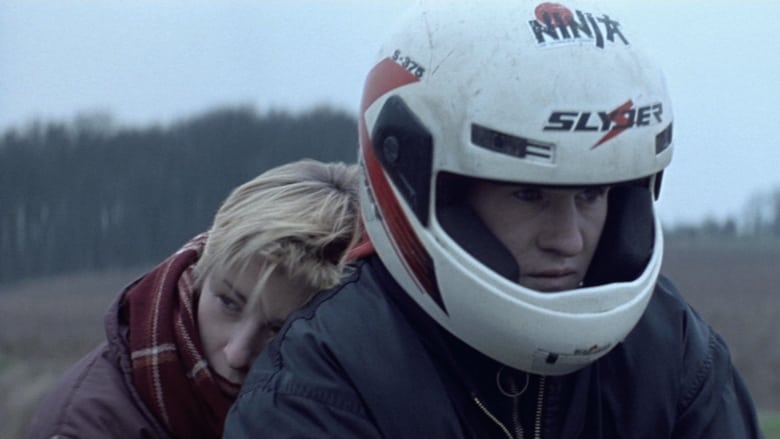
“The Life of Jesus 1997” is a raw and gritty portrayal of the struggles of a young man living in a French housing project. He navigates love, violence, and poverty while trying to find his place in the world. The film is visually striking and emotionally intense, showing the harsh reality of life on society’s outskirts. It is a stark reminder that even in the midst of darkness, there can be moments of hope and tenderness.

⇣⇣⇣
Review
The Life of Jesus, a critically acclaimed film by director Bruno Dumont, is a breathtaking portrayal of the Son of God. The movie, which originally premiered in 1997, is set in the small town of Bailleul in northern France. The film not only presents the religious story of Jesus but also examines his humanity and the impact of his teachings on those closest to him.
The plot focuses on the last year of Jesus’ life as he travels through the Galilee region and eventually makes his way to Jerusalem, where he is eventually crucified. The movie shows how Jesus’ teachings were increasingly at odds with the religious and political authorities, who saw him as a threat to their power.
Shot in a minimalist style with natural lighting and nonprofessional actors playing many roles, The Life of Jesus feels like an immersive experience. Dumont also creates a powerful sense of place; you can practically feel the heat and humidity from the Mediterranean sun on your skin.
The lead character, played by David Douche, delivers an understated performance that captures both Jesus’ divinity and humanity. His interactions with his disciples and Mary Magdalene are portrayed with sensitivity and depth.
One standout scene takes place in a field where one of Jesus’ disciples expresses doubt about his message. Douche delivers a stirring monologue that stresses compassion over judgment; it’s one of many moments where you can see why people would be drawn to this man.
In addition to its compelling storytelling, The Life of Jesus boasts a stunning score composed by Richard Cuvillier that enhances every scene. The music is often hauntingly beautiful and perfectly complements the minimalist style of filmmaking.
Despite its critical accolades, The Life of Jesus has not been without controversy. Some religious groups have criticized its depictions as too graphic or sacrilegious. However, others see it as an honest portrayal that humanizes Christ without diminishing his divine nature.
Beyond its religious implications, The Life of Jesus stands as a masterful example of filmmaking. The use of natural light and the decision to use nonprofessional actors add to the authenticity of the production. Additionally, Dumont’s use of long takes creates a sense of immersion that draws viewers in.
The movie was especially unique in that it was shot entirely on location in Bailleul, with many scenes being filmed in the town’s actual streets and buildings. This adds to the film’s sense of realism and gives viewers an opportunity to appreciate this beautiful French town.
While The Life of Jesus may not be for everyone, it is undeniably a powerful work that demonstrates the impact and legacy of Jesus Christ. Its combination of minimalist style, striking performances, and stirring score make it a must-see for cinephiles and religious enthusiasts alike.
In addition to its cinematic strengths, The Life of Jesus has also won various awards at film festivals around the world. These accolades include the Caméra d’Or for best first feature at the 1997 Cannes Film Festival.
The cinematography by Yves Cape is nothing short of breathtaking; his use of natural light creates shadows and depth that draw you into every shot. The camera lingers on faces and landscapes, allowing viewers to contemplate each scene’s significance fully.
One particularly heartbreaking moment comes towards the end when Jesus is forced to carry his own cross through Jerusalem. As he stumbles under its weight, we see close-up shots of his face wracked with pain and exhaustion; it’s a powerful reminder that this man suffered greatly for his beliefs.
Critics have lauded Dumont’s direction as bold and innovative; he takes risks with both his storytelling choices and his casting decisions. In choosing nonprofessional actors like Douche for key roles, Dumont has created a film that feels authentic and intimate.
Overall, The Life of Jesus is an unforgettable exploration of one man’s journey and legacy. Whether you approach it as a religious text or a cinematic masterpiece, there’s no denying the power of this film.
Technical Data
- Runtime : 96
- Release : 1997-06-04
- Genre : Drama
- Cast : David Douche as Freddy, Marjorie Cottreel as Marie, Kader Chaatouf as Kader, Sébastien Delbaere as Gégé, Samuel Boidin as Michou
- Crew : Rachid Bouchareb as Producer, Jean Bréhat as Producer, Muriel Merlin as Production Manager, Yves Deschamps as Editor, Guy Lecorne as Editor
- Popularity 6.389
- Budget : 0
- Revenue : 0
- Company : 3B Productions, Norfilm, PROCIREP
- Summary : Twenty-something Freddy is becalmed in a podunk French village where the only sign of life is the local amateur brass band and youth aimlessly roaming around the countryside on scooters. He has an intense sexual connection with his girlfriend but has no joy or passion to give her. When she falls for a handsome Arab youth a tragedy unfolds.
- Tagline :
