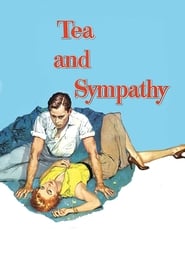
“Tea and Sympathy” is a 1956 film that follows the story of a young man named Tom who struggles to fit in at his all-male boarding school. He is accused of being effeminate and is ostracized by his peers. However, he finds solace in the friendship of the headmaster’s wife, Laura. The film explores themes of gender roles, sexual identity, and conformity through powerful metaphors like a brewing pot of tea – revealing hidden depths with each new sip. In the end, Tom must choose between conforming to societal expectations or embracing his true self with Laura’s encouragement and support.
⇩⇩⇩
Review
In 1956, Vincente Minnelli brought to life the Broadway play “Tea and Sympathy” with a film adaptation that would become a classic. Based on Robert Anderson’s script, the film stars Deborah Kerr, John Kerr, and Leif Erickson.
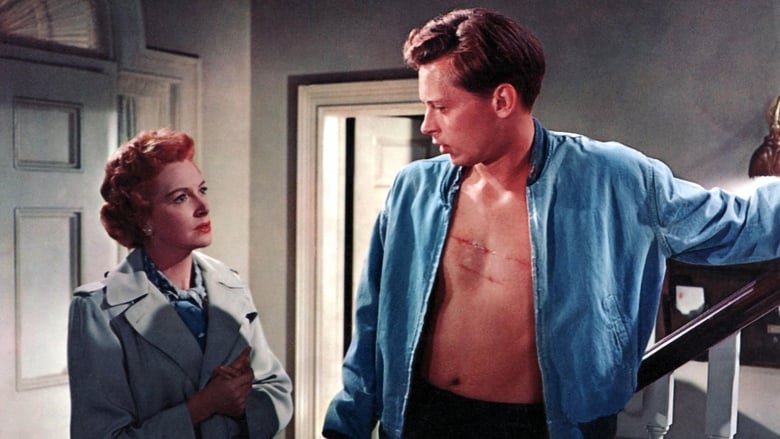
The plot follows Tom Lee (John Kerr), a student at a prestigious boarding school, who is labeled as effeminate by his peers due to his love for literature and music. When Tom’s roommate Bill (played by Darryl Hickman) invites Laura Reynolds (Deborah Kerr), the wife of one of the school’s faculty members, to their dorm room for tea, Tom’s life changes forever.
Laura recognizes that Tom is struggling with much more than just peer pressure. A kindred spirit herself who has also felt isolated from others in her life, Laura takes an interest in Tom and offers him comfort and support when he needs it most. Amid rumors and gossip about their relationship circulating around the school, Laura passes on to Tom some words of wisdom which have resonated with viewers since: “Years from now when you talk about this — and you will — be kind.”
The plot may seem simple on paper, but it is precisely its simplicity that allows for the complex portrayal of gender roles in society during the 1950s. The characters in “Tea and Sympathy” navigate through issues of masculinity and femininity with maturity beyond their years.
Director Vincente Minnelli handled the delicate subject matter masterfully as well. His shots were carefully chosen to convey meaning without being overdramatic or heavy-handed. Minnelli was known for his vibrant use of color and he did not disappoint here either – bright autumn leaves set against richly appointed interior sets created an atmosphere that was just as visually appealing as it was thematically rich.
Deborah Kerr was already well known for her portrayals of strong female leads before starring in “Tea and Sympathy.” In this film, she brought a quiet strength and vulnerability to her character Laura that resonated with audiences. Equally compelling was John Kerr’s portrayal of Tom Lee. He brought a subtle intensity to the role which made his character’s emotional journey all the more impactful.
“Tea and Sympathy” may be considered a classic now, but it was not initially met with widespread critical acclaim. Despite earning four Academy Award nominations, including Best Actress for Deborah Kerr, it wasn’t until years later that the film began to be recognized for its nuanced message and timeless performances.
One criticism of the film at the time was its length. At 122 minutes, some reviewers felt that “Tea and Sympathy” dragged on too long, but others would argue that its pacing was necessary to fully explore the themes at hand.
It’s difficult to evaluate “Tea and Sympathy” without acknowledging how much it has impacted popular culture since its release. Films like “Good Will Hunting” have taken cues from this classic, exploring themes of masculinity and emotionality in similar ways.
Perhaps one of the most memorable aspects of “Tea and Sympathy” is its ability to resonate with audiences on an emotional level. As viewers, we see ourselves in these characters more than sixty years after it was first released. We see moments of isolation overcome by connection; we see societal expectations lifted by acts of kindness; we see our own struggles reflected back at us through Tom Lee’s journey towards self-acceptance.
In conclusion, though it may have been forgotten by some over time, “Tea and Sympathy” remains a testament to Minnelli’s directing prowess and Kerr’s deservedly lauded performance as Laura Reynolds. It is a film whose lessons are just as relevant today as they were in 1956: be kind to one another, listen when someone needs to be heard, and most importantly, never let anyone tell you who you should be.
Technical Data
- Runtime : 123
- Release : 1956-09-27
- Genre : Drama
- Cast : Deborah Kerr as Laura Reynolds, John Kerr as Tom Robinson Lee, Leif Erickson as Bill Reynolds, Edward Andrews as Herb Lee, Darryl Hickman as Al
- Crew : Alexander Courage as Orchestrator, Ferris Webster as Editor, Wesley C. Miller as Recording Supervision, Helen Rose as Costume Design, Adolph Deutsch as Original Music Composer
- Popularity 5.264
- Budget : 0
- Revenue : 0
- Company : Metro-Goldwyn-Mayer
- Summary : At a high school reunion, a man recalls his schooling days, when the only person who seemed to sympathize with him is his housemaster’s wife.
- Tagline : Where does a woman’s sympathy leave off — and her indiscretion begin?
